Keeping your crochet hooks tidy is a bit like keeping your spices organized in the kitchen – everything in its place makes crafting so much smoother. I love how a simple crocheted case can protect your hooks from getting bent or lost. Today, we’re looking at a few ways to get your hooks sorted, with free patterns that are as fun to make as they are useful. We’ve got a sturdy Hook Holder Case that rolls up nicely, perfect for your go-to hooks. Then there’s the charming Star Hook Case, a bit more decorative, and the clever Crafter Granny, which uses a familiar stitch pattern. You’ll learn how to make these, using basic stitches and common yarns. They’re great for beginners looking for a practical first project, or for anyone wanting to make a thoughtful gift for a fellow crafter. Let’s get those hooks organized!
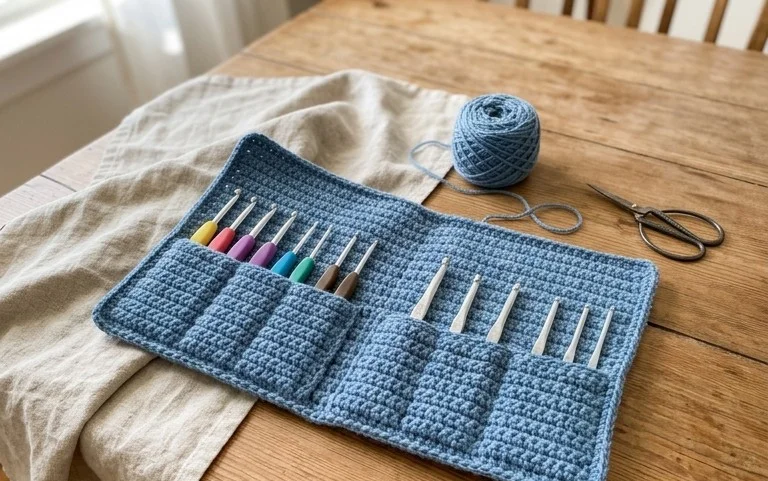
Hook Organizer Ideas and Free Patterns: Hook Holder Case, Star Hook Case, Crafter Granny
A well-organized crochet hook collection is a crafter’s dream. Instead of rummaging through bags or drawers, you want to grab the right hook quickly. These patterns give you a lovely way to store and protect your hooks, and they’re all free!
Hook Holder Case
This is a straightforward, rectangular case that rolls up neatly. It’s perfect for keeping your most-used hooks together and protected. The design often includes individual slots for each hook, preventing them from scratching each other.
Yarn and Hook Recommendations
For a case that needs to be durable and hold its shape, a medium-weight (worsted weight) yarn is ideal. Cotton yarns are excellent choices because they are strong, washable, and have a nice grip. Acrylic yarns are also a good option for affordability and a wide range of colors. Look for yarns like Lily Sugar ‘n Cream, Bernat Handicrafter Cotton, or Lion Brand Vanna’s Choice. The recommended hook size will typically be around a 5.0mm (H/8) or 5.5mm (I/9), depending on the yarn and your tension. You want the stitches to be firm enough to create a sturdy fabric but not so tight that the case becomes stiff.
Stitch Techniques Used
The Hook Holder Case usually relies on a few basic stitches. The most common is the single crochet (sc), which creates a dense, durable fabric. You might also see half double crochet (hdc) for a slightly quicker stitch that still has good body. Some patterns might incorporate the back loop only (BLO) technique for the single crochet, which gives the fabric a subtle ribbing effect and can make it lie flatter. If there’s a flap or closure, you might use double crochet (dc) for faster row construction. The finished piece is typically crocheted in rows, then folded and seamed.
Tips for Beginners
If you’re new to crochet, this case is a fantastic project. Focus on maintaining consistent tension. This means trying to make each stitch roughly the same size. If your stitches are too loose, the fabric will stretch and might not hold your hooks securely. If they’re too tight, the case will be stiff and difficult to work with. Don’t be afraid to use stitch markers to keep track of the beginning and end of rows, especially if you’re working back and forth. Practice the single crochet stitch until you feel comfortable with it. Also, ensure you’re correctly identifying the loops of the previous row when working in the back loop only.
How to Customize
Colors: This is where you can have a lot of fun! You can use a single, solid color for a classic look, or stripe it up with multiple colors. You could even use a variegated yarn for a no-fuss multi-color effect. Consider color combinations that match your existing craft supplies or your personal style.
Sizes: Most patterns will suggest a hook size for the main body, but you can adjust the dimensions by changing the number of foundation stitches or the number of rows. If you have a lot of hooks, make it longer. If you only carry a few, a shorter, wider case might be better. You can also adjust the width of the individual hook slots by adding or removing stitches within those sections.
Care Instructions
For cotton yarns, the finished case can usually be machine washed on a gentle cycle with cool water and mild detergent. Lay it flat to dry to prevent stretching or distortion. If you’ve used acrylic yarn, follow the yarn label’s instructions, but generally, acrylic is also machine washable and can be tumble dried on low heat. Always check the specific yarn you used for the best care advice.
Project Ideas
Beyond organizing your own hooks, this case makes a thoughtful handmade gift for any crocheter. You could make a set for a friend who travels with their crochet projects. It’s also a great way to use up scrap yarn if you have several small bits of coordinating colors.
Star Hook Case
This design offers a bit more flair with its star shape. It often closes with a button or a tie, and the star points can add a charming visual element. It’s a step up in complexity but still very achievable.
Yarn and Hook Recommendations
Similar to the Hook Holder Case, a sturdy yarn is beneficial. Worsted weight cotton or a durable acrylic blend works well. For the star points to stand out nicely and have a defined shape, you might want to use a slightly smaller hook than you would for the main body, to create a firmer fabric in those areas. A common hook size might be 4.5mm (7) or 5.0mm (H/8). A yarn that doesn’t split easily will make working the points of the star much smoother.
Stitch Techniques Used
This pattern will likely involve single crochet (sc) for the body and base. The star shape is often created using increases and decreases within the rounds. You’ll probably encounter double crochet (dc) and potentially treble crochet (tc) stitches to create the points. Techniques like working stitches into the same stitch to create fullness, and skipping stitches or working stitches together (dc2tog, tc2tog) to decrease are key to shaping the star. A decorative border, perhaps using slip stitch (sl st) or a combination of sc and chain stitches, might also be used to define the edges.
Tips for Beginners
The star shape can be a bit trickier. Take your time with the increases and decreases. It helps to read the pattern carefully and understand how many stitches you should have at the end of each round. Counting stitches is your best friend here. If the star points aren’t forming as you expect, double-check your stitch counts and make sure you’re working into the correct stitches. A yarn in a lighter color might make it easier to see your stitches as you learn the shaping.
How to Customize
Colors: For a star, consider using a contrasting color for the star points if the pattern allows, or for an edge. A solid color often highlights the star shape best. You could also crochet a separate, smaller star to sew onto a plain hook case as an embellishment.
Sizes: The size of the star hook case is often determined by the number of rounds worked for the main body and the number of points. You can adjust the diameter by adding or subtracting rounds before you start shaping the points. The length of the flap that closes the case can also be customized.
Care Instructions
Follow the same care instructions as for the Hook Holder Case, prioritizing machine washability and flat drying for most cotton and acrylic yarns.
Project Ideas
This star hook case is particularly charming. It’s a great project to make for craft fairs if you sell your creations. It also makes a sweet gift for anyone who loves a touch of whimsy in their crafting supplies.
Crafter Granny
This option often refers to a granny square style organizer, which can be square, rectangular, or even circular, but the defining characteristic is the use of the classic granny stitch. These are often very customizable and can be made to hold a variety of notions in addition to hooks.
Yarn and Hook Recommendations
Worsted weight yarn is excellent here, allowing the granny stitch to create a lovely, slightly lacy fabric. Cotton, acrylic, or a blend will work well. Because the granny stitch can grow quite quickly, you might want to use a hook size that’s slightly smaller than recommended for the yarn weight to keep the fabric from being too loose, perhaps a 4.0mm (G/6) or 4.5mm (7). This will help the stitches stay defined and prevent items from slipping through the gaps.
Stitch Techniques Used
The hallmark of this pattern is the granny stitch, which is typically worked in groups of double crochet (dc) stitches, usually three, separated by chain stitches. You’ll be working in the spaces between clusters of the previous round, creating that characteristic open, diamond-like pattern. You’ll likely use chain (ch) stitches to form the spaces and possibly slip stitch (sl st) to join rounds. For closure or strap elements, you might also use single crochet (sc).
Tips for Beginners
The granny stitch itself is quite simple once you get the hang of it. The key is understanding where to place your clusters. You’ll be working into the chain-spaces created by the previous round. Don’t be afraid to count your clusters in each round to ensure you’re on track. If you’re making a flat panel, joining rounds consistently is important. If you’re working in the round, learning to do so without a visible seam is a good skill to practice.
How to Customize
Colors: The granny stitch is perfect for color changes. You can change colors at the start of each round for a bold, striped effect, or use a variegated yarn. You can also crochet multiple smaller granny squares and join them together to create a larger, more complex organizer.
Sizes: The size of a granny square organizer is easily adjusted by adding more rounds. For a hook case, you’d typically make a square or rectangle, then fold it and seam up the sides, leaving a flap for closure. The number of granny clusters per side directly influences the final dimensions.
Care Instructions
As with the other patterns, cotton and acrylic yarns are usually machine washable. Lay flat to dry. If you’ve used a yarn that requires special care, always consult the label.
Project Ideas
A granny square hook organizer can be adapted to hold more than just hooks. You could create pockets for stitch markers, scissors, or a small notepad. It’s a versatile design that can be a standalone piece or part of a larger crochet bag or set of crafting accessories.
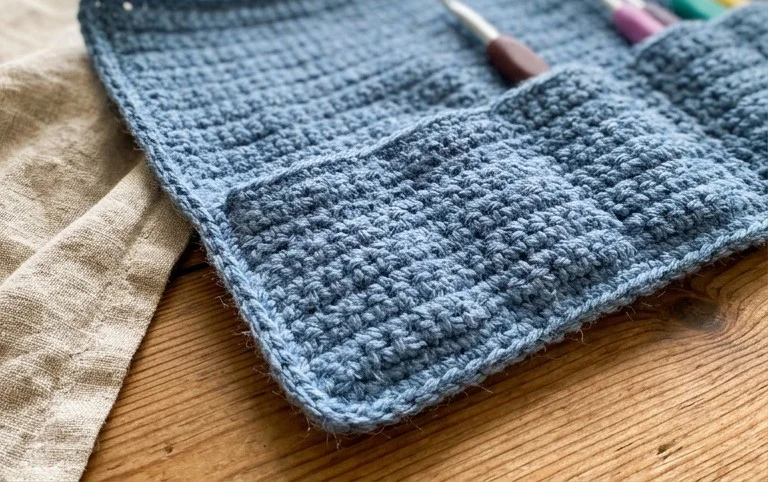
So there you have it – three lovely, free crochet patterns to get your hook collection in order. Whether you choose the simple roll-up Hook Holder Case, the sweet Star Hook Case, or the textured Crafter Granny, you’ll end up with a practical and pretty way to store your tools. Try using different yarn colors or even adding a button closure for a personal touch. If you make one, I’d love to see it! Share a picture on your favorite social media and tag me so I can admire your work. Don’t forget to explore more patterns here for other useful crochet projects.